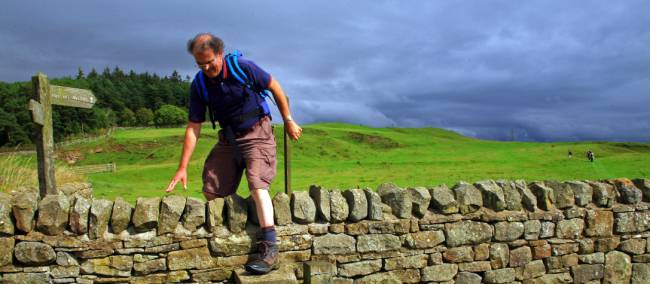
A crossing over Hadrian's Wall | John Millen
Hadrian’s Wall Trail Walk FAQ
Today’s frequently asked questions are answered by resident guide John, who went on a Hadrian’s Wall walk.
Why was Hadrian’s Wall built?
We know from tablets that Emperor Hadrian wanted to keep "intact the empire", which had been imposed on him via "divine instruction." The wall was a defensive fortification in the Roman province of Britannia, begun in AD 122 and used for around three centuries. The wall was built by 15,000 men in under six years and runs from the banks of the River Tyne near the North Sea to the Solway Firth on the Irish Sea. From here the Romans could command their resources and control the raiding skirmishes of the Northern Britons.
What is special about walking Hadrian's Wall Trail?
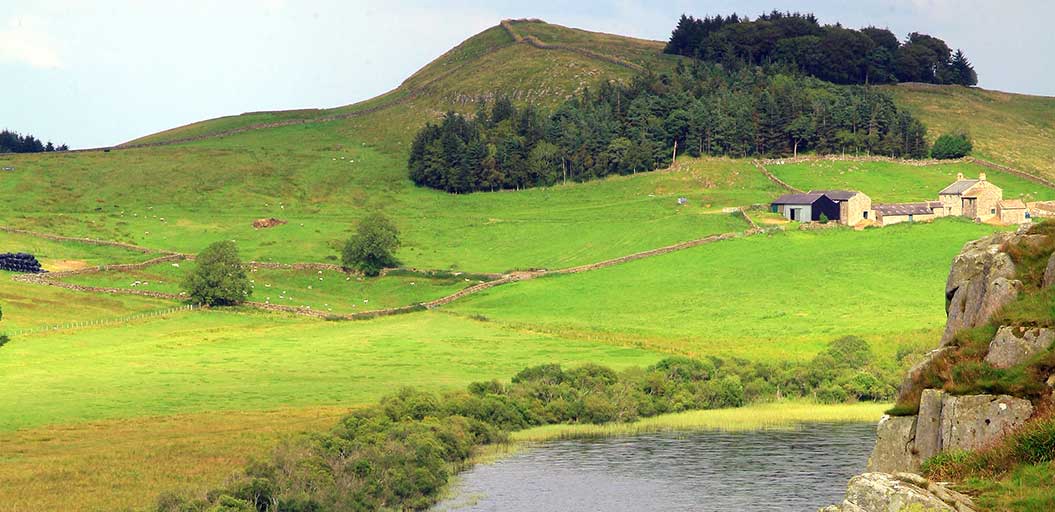
Hadrian's Wall is the finest surviving frontier construction of the Roman Empire. Although by no means continuous in its current state, the long-distance footpath that we know as Hadrian’s Wall Trail stretches for 83 miles from Newcastle Upon Tyne to Bowness on Solway. Over this distance, over hill and dale you will find milecastles, barracks, ramparts and forts, in ever changing scenery. If you have a good imagination you will enjoy a walk in history. There are plenty of museum sites and other things to see as well including mediaeval castles, old villages, the bridges over the River Tyne and a look round Carlisle.
Can you see much of the wall when you walk it?
People may have in their mind something that looks like the Great Wall of China; but the ravages of time and use of the dressed stone from the wall for urban building, stone walling and road construction have all reduced its size. The final third of the wall to the west, was a mud embankment originally. You only see a tiny section of wall in Newcastle, a bit more in Heddon on the Wall, and then the stone walling really takes off as we walk into the undulating central section of Hadrian’s Wall.
Hadrian's 1900
2022 was a special year to complete Hadrian's Wall Path with a whole range of special events taking place for the wall's 1900th(!) anniversary.
Do you actually walk on Hadrian’s Wall?
The wall is a UNESCO recognized monument and the path does not walk directly on it to avoid damage, although there are places where you cross it or walk on it to visit museums, milecastles etc. The ditch built by the Romans beside the wall is often associated with a modern road, so you do actually walk parallel with roads for much of the first couple of days and the last day especially. Apart from where these are quiet lanes however, you will be walking generally on a specially created footpath beside the road or beside the wall.
What impressed you about this trip?
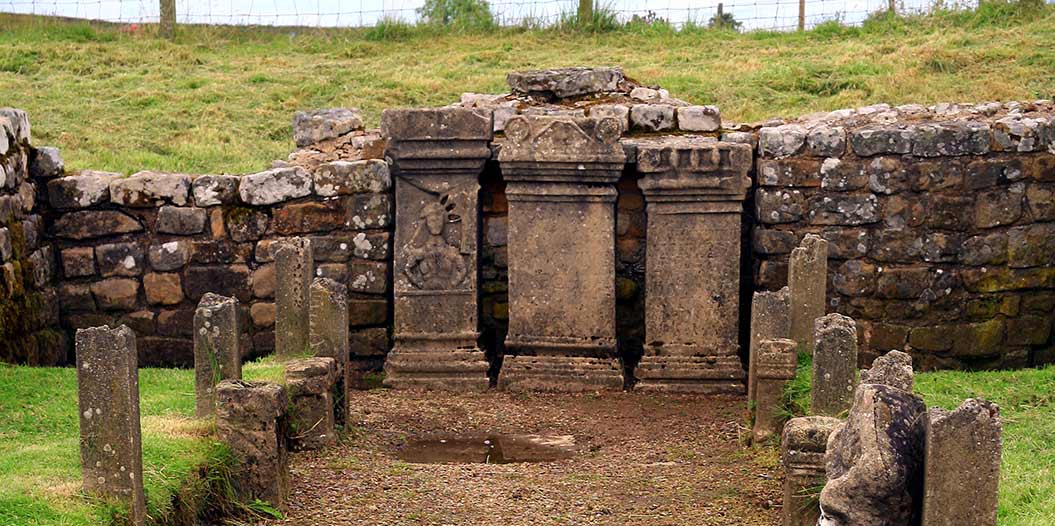
I love the section between Milecastle 31 at the Temple of Mithras and Milecastle 49B, at Birdoswold. There are so many great views and classic landscapes such as looking over Crag Lough - a lochen at the base of crags. There is 'Sycamore Gap' where an iconic sycamore tree grows at a gateway in the wall. Other surprises include minor things: walking past rock crags and cliffs where they quarried the stone 2000 years ago and seeing holes where 'pincers' were used to lift cut rock. Also seeing the substantial foundations of the Roman Bridge at Chollerford, was quite a surprise.
Who would you recommend to go for a Hadrian’s Wall walk?
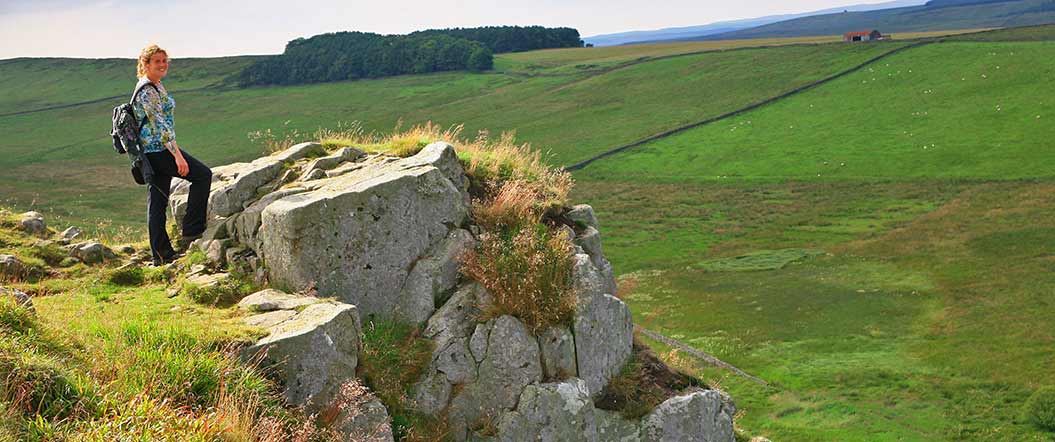
Anyone with a good level of fitness can enjoy this walk, but it will especially appeal to people with an interest in history. There will be good opportunities to make the most of the historical sites along the way. A Hadrian’s Wall walk is also an excellent first time long-distance path to take. The hike is well waymarked as it is a 'National Trail' and so navigation is rarely an issue. It is also another coast to coast walk as you start on the tidal River Tyne and finish by the Irish Sea. For some, it may be an alternative to well known 'Wainwright's Coast to Coast,' that takes two weeks to walk from coast to coast.
Is Hadrian’s Wall Trail very popular?
On large sections of the walk you will not see many people at all, but the middle section around Housteads Fort and the hills of Steel Rigg get a lot of walkers and day trippers who walk and visit the forts such as Housteads, Vindolanda (off route), Birdoswald and Chesters.
Are there extra costs involved when I want to hike Hadrian’s Wall?
We choose to exclude lunches and dinners on this trip as there are many options to choose from along the way. Also, visits to the museums, open air or otherwise, do add up and you should decide locally whether you have the time and energy to visit them. Admissions vary and apply to Segedunum (£5.95), Vindolanda (£11), Housesteads (£7.50), Birdoswald (£6.50), and Chesters (£6.60) – prices valid at the time of writing. The last three are run by 'English Heritage' and it might be worth your while to become a member of them or buy an overseas visitor pass (9 or 16 day options) if there are more things you want to see that they run in England.
We hope this information has indeed answered some of the questions you may have had on doing the Hadrian’s Wall walk. If you have other queries, please get in touch with John and the Walkers' Britain team via phone or email.
>> View all of our Hadrian's Wall tours.
Did you like this Q&A and would you like to get similar details of one of our other active Europe holidays? Let us know in the comment section below.