Blog home / Tramping Coast to Coast in Northern England
Tramping Coast to Coast in Northern England
Peter Wells
Preparing for the Coast to Coast Walk
Long distance walking, alone or with a partner or group, benefits both body and soul and is a grand way to experience the nature of a country. My objective this past spring was the famed Wainwright Coast to Coast route across northern England, considered one of the classic country walks (Baxter 2016).
After a winter of planning, anticipation and conditioning, I flew to London in late April, 2019, went north by train to Penrith in Cumbria, and by bus to Keswick, the market town in the heart of the Lake District National Park and the Cumbrian Mountains. While staying in a pleasant Inn in Keswick for 10 nights, I did lots of local walks and some climbs up the beautiful rocky peaks, locally called fells. Some relatives came to visit, stayed close-by, and provided company one day for a strenuous climb up two of the highest fells in the Park. They likely were testing the condition of “the old guy from the colonies”!
Beginning the Walk at St Bees
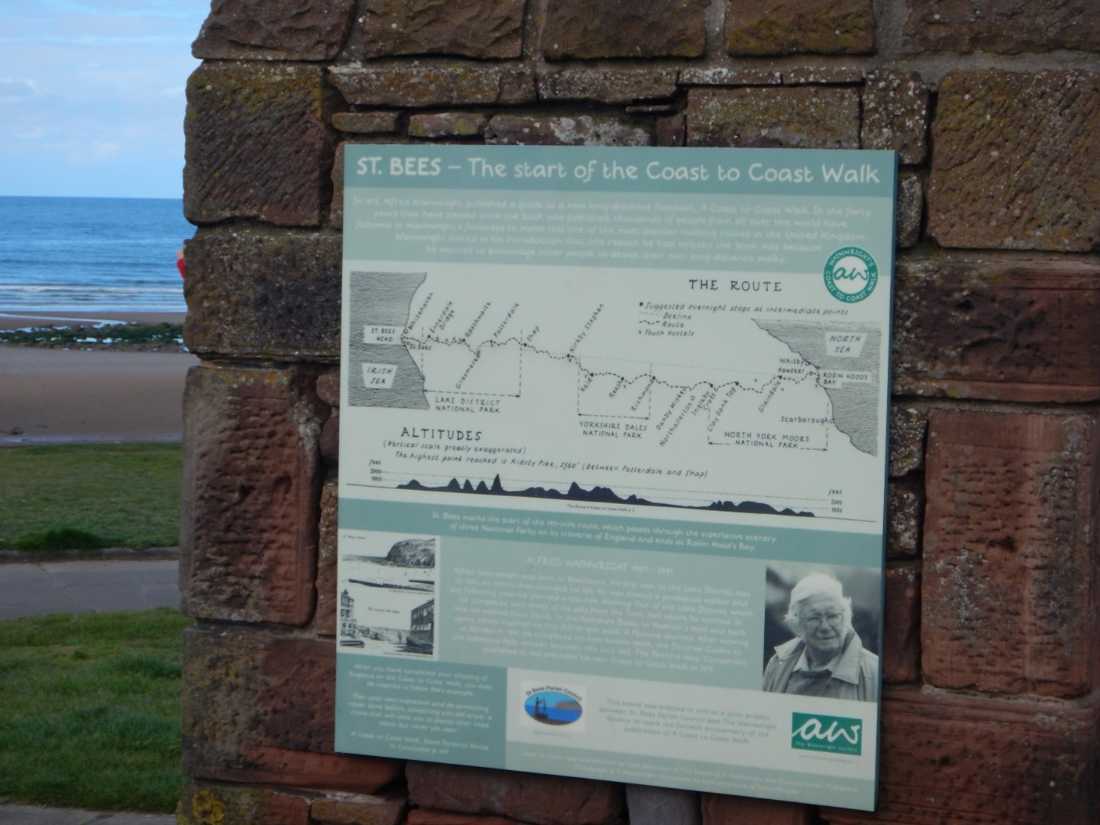
In early May, I went by bus and train westward to the coast of the Irish Sea and village of St. Bees, the starting point of the Coast to Coast walk. There, by pre-arrangement with the company Walkers' Britain & Europe, I joined a group of nine Australians and a guide from Yorkshire. This offered company, ease of route-finding, and prearrangements for accommodation and baggage transfer - no longer did I have to carry the 12+ kg pack of recent UK walks!
The Vision of Alfred Wainwright
The walk is named after Alfred Wainwright (MBE, 1907-1991), a life-long lover of the Lake District’s mountains and lakes. He was a dogged writer of renown who tramped all the paths in the District and penned and beautifully illustrated many hiking guidebooks in mid to late twentieth century. Late in life, he had the vision of a route across the whole of northern England, passing through three national parks and by its many towns, villages and historic sites. The walk has gained fame and attracts several thousand people annually.
It is formally 192 miles (307 km) long, takes 15 continuous days, is generally done west to east to accommodate the prevailing winds, and is considered to be of moderate difficulty. Several excellent guidebooks and maps are available (see References). The route is marked in relatively few places so an experienced trip guide is preferred for easier travel, especially through the mountainous sections and the moors where many paths intersect and danger lurks in poor weather.
Walking Across Northern England
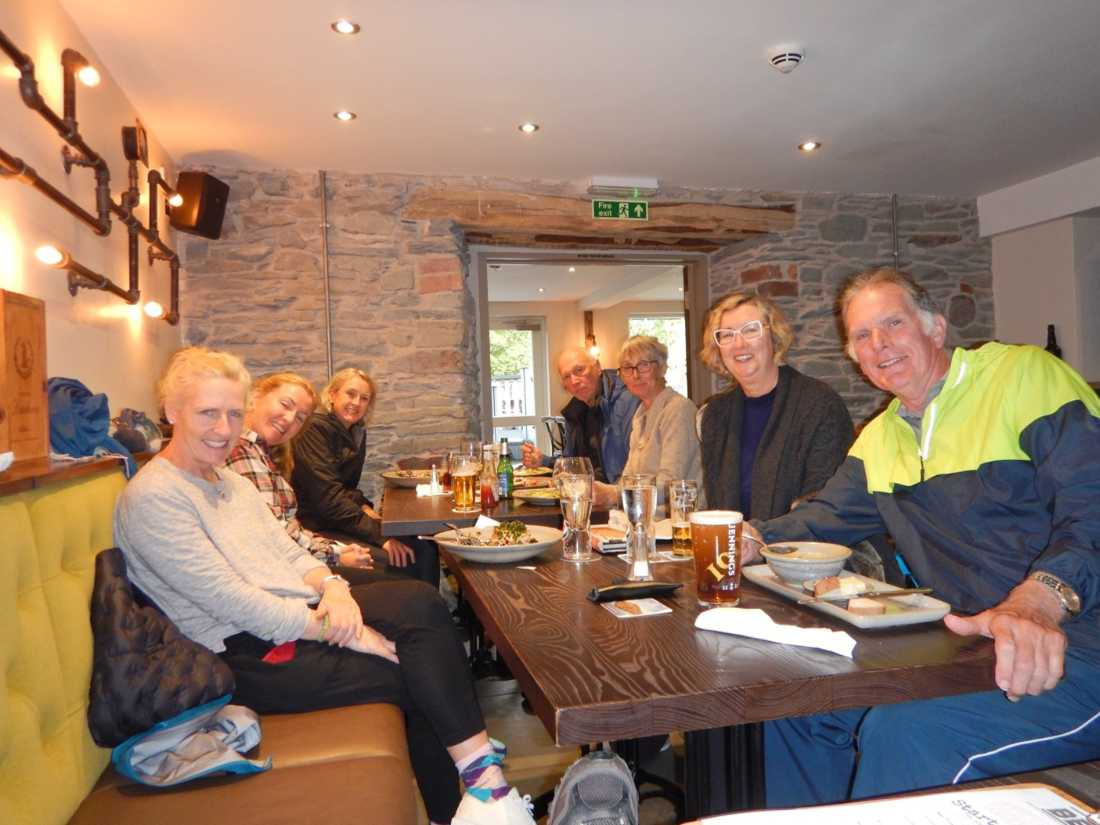
My companions were from all parts of Australia and the guide was from Leeds, Yorkshire – a merry group we were! The walk took us through the three national parks which have quite different landscapes – mountains, hills and valleys (vales) and moors stretching from sky to sky. Walking 6-9 hours a day, we sometimes stopped for short rests and exploration of interesting sites. At the end of each day, we dined together and shared stories of what we had seen or occasionally suffered through (i.e., the weather - rain, sleet, wind, heat – a very variable mix over the 15 days).
The companionship made the walk fun; the group quickly bonded, given the conditions. Australians are very friendly and considerate, as was our guide. One member was constantly taking pictures of us, hopefully soon to be seen! Two of the group suffered badly but bravely from blistered feet, not a trivial problem on such a walk.
Landscapes and Wildlife
The landscapes of northern England are impressive – big mountain vistas, long river valleys, high ridges, and moors stretching horizon to horizon – an amazing wild land that remains largely intact, despite England’s large population and long (~8000 y) human history. We saw little wildlife, only a few birds such as geese, ducks and sparrows, and noisy quail on the moors. But there were hillsides filled with bluebells and yellow gorse, and in the agricultural areas, there were lots of sheep, cattle and horses, and fields of barley and canola, which we often walked through.
History Along the Trail
In the Cumbrian mountains, we came across huts for walkers, and on the moors, huts for hunters who shoot quail in the fall. East of the mountains, after almost a week of walking, on top of a high hill were nine large stone cairns, “the Nine Standards Rigg"; they are of unknown origin, perhaps Roman, perhaps more recent, but impressive for their size and visibility from afar.
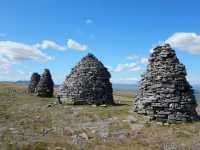
While walking across the moors, we often came across ancient (Neolithic) burial mounds and many stone way markers. We visited numerous old churches and chapels on the route , one of them with a tombstone for a villager claiming to be 169 years old! The village is said to be popular with retirees.
Villages, Inns and Local Hospitality
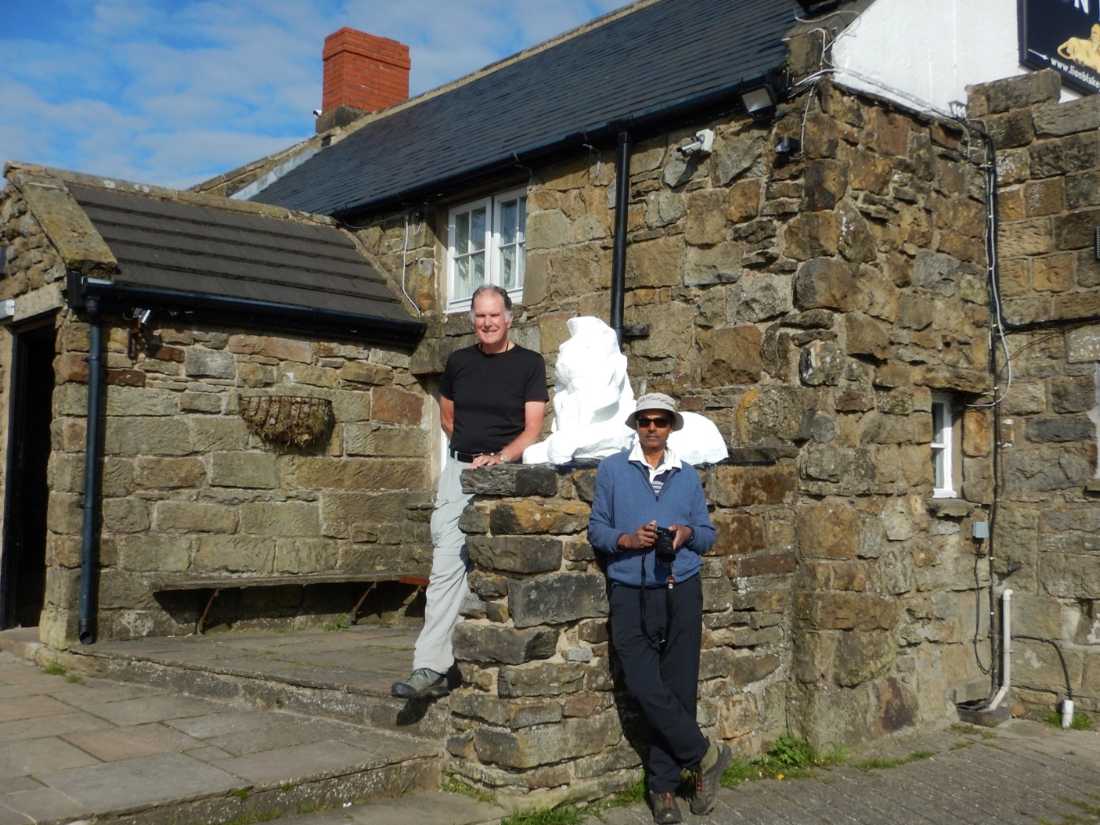
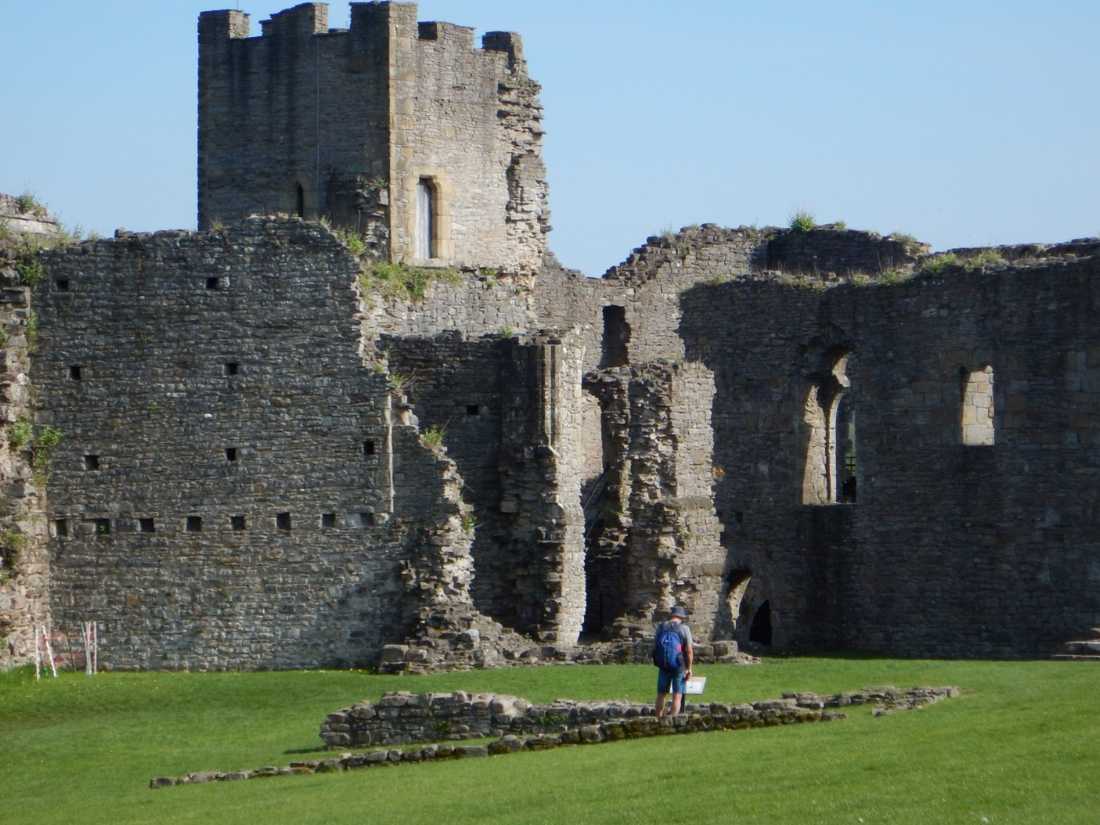
We walked through a variety of pretty villages and larger market towns, and stayed in pubs and small hotels, such as the quite isolated Lion Inn in the North York moors. All were well-chosen, very quiet and comfortable, with excellent food and drink. Tasting local ales was popular at the end of a long day! In Richmond, Yorkshire, the largest town on our route, we were treated to an afternoon of exploring ruins of a thousand year old Norman castle.
Walking the North York Moors
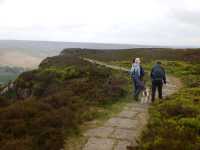
A highlight of the walk for me was being met by English friends from the previous SW Coast Path walks. We hiked together for two days in the North York Moors NP where a well maintained slated trail intersects with another path, the Cleveland Way. This park is a rugged landscape of hills, moors, rocky ridges, steep climbs, and spectacular views.
Reaching Robin Hood’s Bay
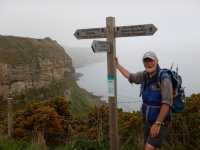
On Day 15, the walk ended above cliffs of the North Sea coast, near our destination, Robin Hood’s Bay. A three mile (5 km) walk south along the cliff tops led us to the picturesque town, where we dipped toes into the sea and celebrated the walk with a special dinner and plenty of warm farewells.
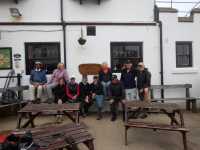
I completed my journey by heading south, visiting cousins and friends for a week before flying home. The next walking adventure is being planned, perhaps this time in Scotland. With so many fascinating places to explore, there may be more tramping tales in these pages next year!
See how you can explore the Coast to Coast
> View all Coast to Coast itineraries
References
Baxter, S. 2016. A History of the World in 500 Walks. Thunder Bay Press, San Diego, CA. 400p.
Goodier, S. 2014. Lake District Literary Walks. Northern Eye Books, Tattenhall, Cheshire. 64p.
Marsh, T. 2017. Walking the Coast to Coast Walk. St Bees to Robin Hood’s Bay. Cicerone, Milnthorpe, Cumbria. 249p.
Richards, M. 2017. Great Mountain Days in the Lake District. Cicerone, Milnthorpe, Cumbria. 287p.
Stedman, H. and D. McCrohan. 2018. Coast to Coast Path. Trailblazer Publications, Hindhead, Surrey. 268p.
Wainwright, A. 1973. A Coast to Coast Walk. A Pictorial Guide. Francis Lincoln, London. 168p.