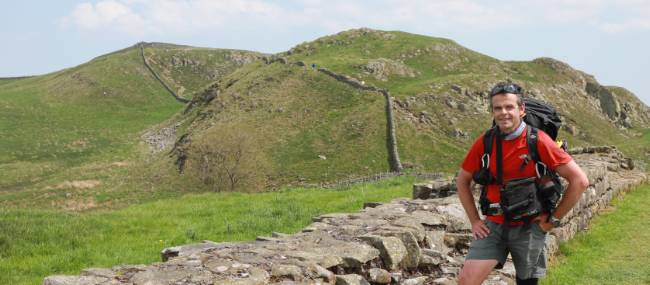
Hadrians Wall over the hillsides | John Millen
Blog home / Hadrian’s Wall Walk: 7 Facts About This English Icon
Hadrian’s Wall Walk: 7 Facts About This English Icon
Protected by UNESCO since 1987, Hadrian’s Wall today stands as the largest remaining artefact from Roman times anywhere in the world.
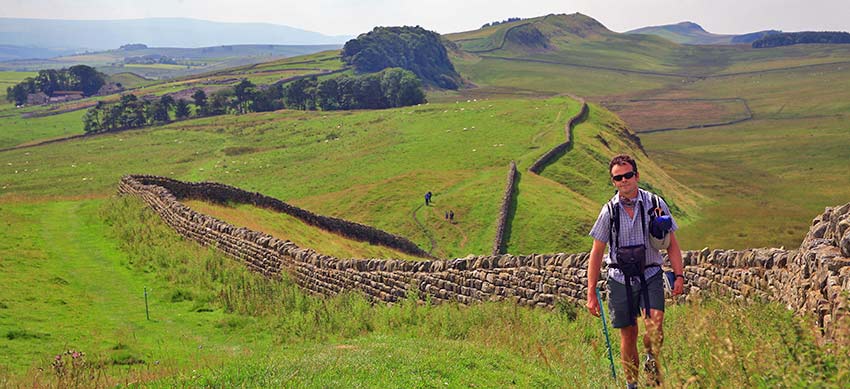
A must-see for history aficionados, this Roman wall in England can also be explored on foot along the adjoining 83-mile Hadrian’s Wall Path. The undulating, well-waymarked walk follows the ancient Roman Wall with a largely rural feel – we believe that the middle three days in the south Northumberland National Park are the most spectacular!
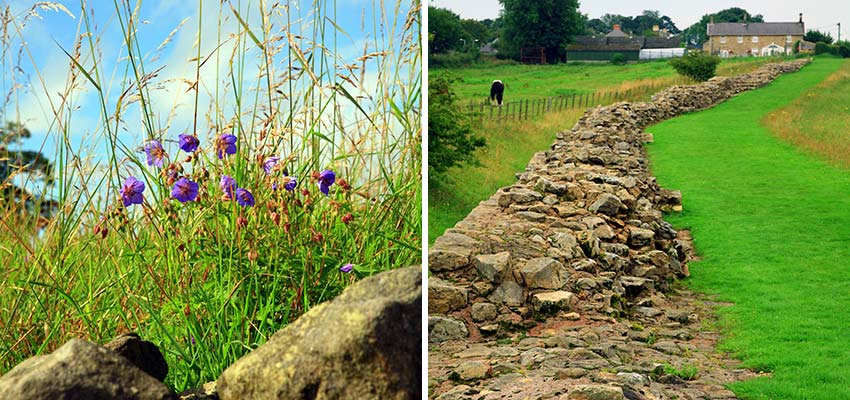
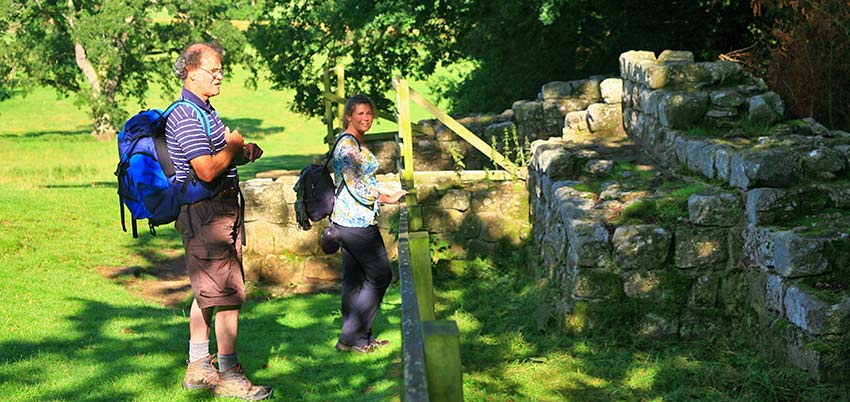
Hadrian's 1900
2022 was a special year to complete Hadrian's Wall Path with a whole range of special events taking place for the wall's 1900th(!) anniversary.
Below are 7 Hadrian’s Wall Walk facts you may not yet know about the celebrated British icon:
1. The history of the Hadrian’s Wall goes back to 122AD
The Hadrian’s Wall is a defensive fortification conceived by Hadrian, who ruled the Roman Empire for more than 20 years (117-138AD). It was constructed in the province of Britannia, which at that point marked the northernmost border of the Empire, to “separate Romans from Barbarians”.
2. The Roman Wall is built across northern England’s narrowest point
Hadrian’s Wall originally ran between the Solway Firth on the Irish Sea and the banks of the River Tyne, close to the North Sea; this is the narrowest point in northern England. It took 6 years to complete and, in its original form, it covered 80 Roman (73 modern) miles.
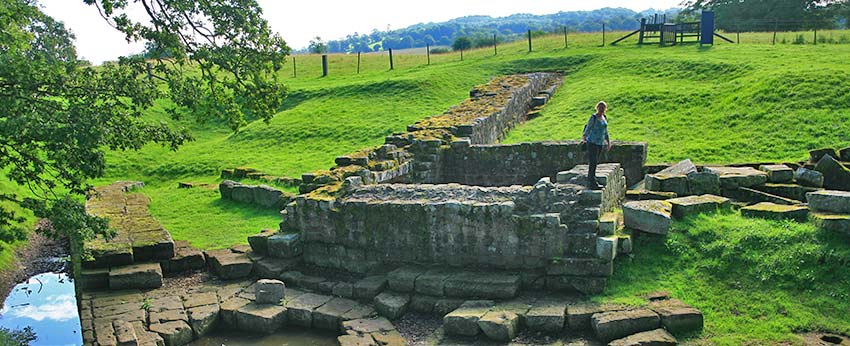
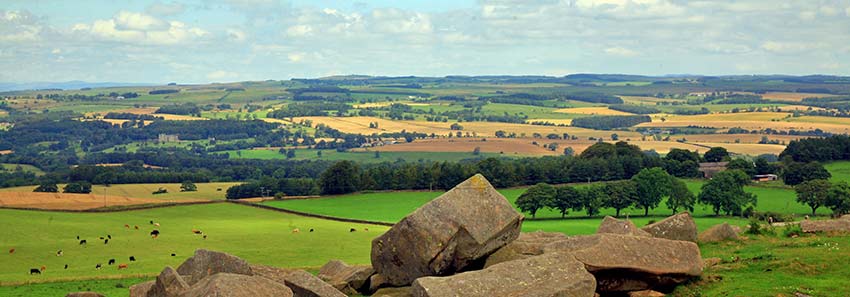
3. Post forts were built on every Roman mile…
…although Hadrian's Wall mainly served as a military construction: huge garrison forts were built at intervals, allowing for a counter attack or a raid to be organised at short notice. A deep ditch, known as The Vallum, was dug alongside it, while gatehouses would control access over the frontier forests and moors.
4. It was extended and enhanced with impressive stone defences over the years
Initially, stone was brought in on the Tyne by boat to supply those areas where it could not be cut locally. At later stages, much of the stonework was mortared, allowing the Wall to survive the centuries to become one of the oldest structures in the country today.
5. UNESCO describes Hadrian’s Wall as “a striking example of the organization of a military zone”
Hadrian’s Wall was inscribed on UNESCO’s World Heritage List in 1987 as an “outstanding example of Roman military architecture”, protected for its “extraordinarily high cultural value”. According to UNESCO, much of it remains “in an exceptionally good state of preservation, surviving as part of a landscape which still contains significant visible traces of the Roman military presence”.
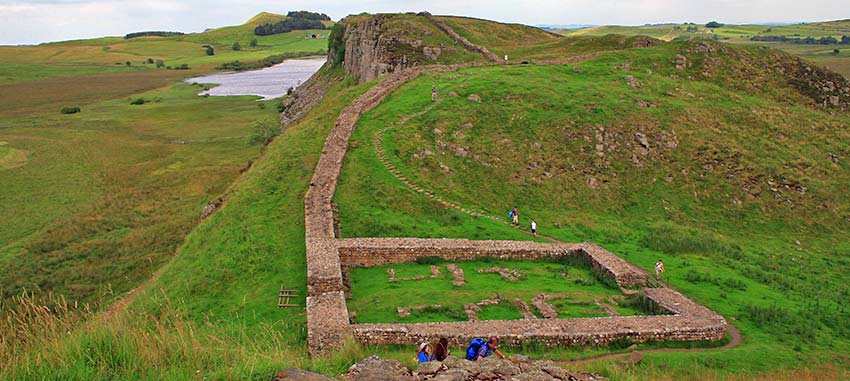
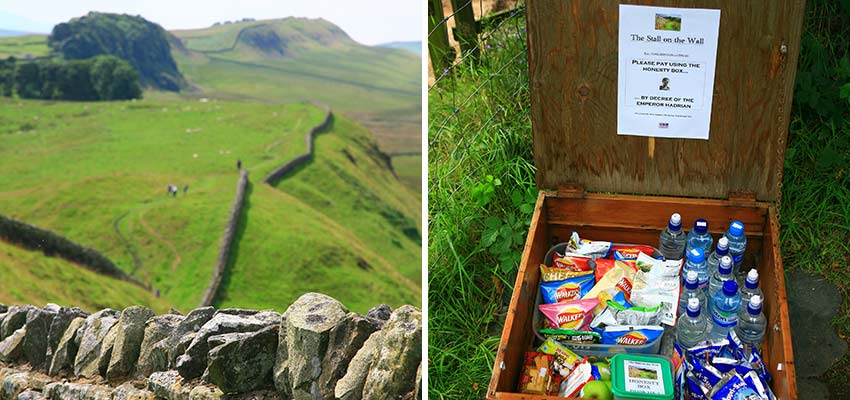
6. The Hadrian’s Wall Path celebrated its 15th anniversary in 2018
Classified as a ‘National Trail’ in the UK, the Hadrian's Wall Path officially opened in May 2003 after many years of negotiations with landlords and farmers to finalise the exact route. A Hadrian’s Wall walk will take you to follow 83 miles across English town and country, forest and moorland, World Heritage Site and National Park.
7. It is often described as an alternative English Coast-to-Coast route
More than just tracing the history of England’s North, the Hadrian's Wall Path offers abundant scenic variety, from the modern cityscapes of Newcastle upon Tyne (North Sea) to the red sandstone hues of medieval Carlisle and from industrial Tyneside to the quiescence of Bowness on Solway (Irish Sea). With that, it can be seen as an alternative route to the famous Wainwright's Coast to Coast trail. Expect barren blustery heights in the Northumberland National Park and lime green pastoral scenes in the Eden Valley… omnipotent along the route, Hadrian’s Wall snakes its way!
If you feel inspired to walk the Hadrian’s Wall Path, at Walkers' Britain we offer two options to follow the Roman wall in England over 8 or 10 days, as well as a cycling option.
Follow Hadrian's Wall Walk in England
>> Hadrian's Wall Trail - 8 Days
>> Hadrian's Wall Trail - 10 Days
>> Hadrian's Cycleway